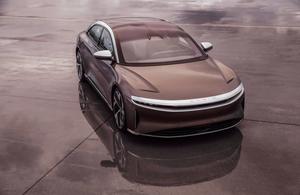
Lucid Group Inc is an innovative automotive company that specializes in the design, manufacturing, and marketing of electric vehicles (EVs). With a focus on luxury and sustainability, Lucid aims to revolutionize the EV market by offering high-performance vehicles that combine cutting-edge technology, elegant design, and an emphasis on energy efficiency. The company's flagship model, the Lucid Air, showcases advanced features such as impressive range capabilities, fast charging, and a spacious, high-tech interior, positioning Lucid as a significant player in the growing electric vehicle industry. Additionally, Lucid Group is committed to expanding its production capabilities and enhancing the EV ecosystem, contributing to a more sustainable future in transportation. Read More
As we enter 2026, Tesla (NASDAQ: TSLA) remains the most scrutinized and debated ticker on Wall Street. Following a tumultuous 2024 and 2025—marked by what analysts have called a "delivery hollow" and a significant strategic pivot—Tesla has transitioned from being viewed solely as an electric vehicle (EV) pioneer into a multifaceted AI and robotics powerhouse. [...]
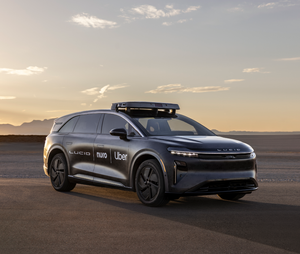
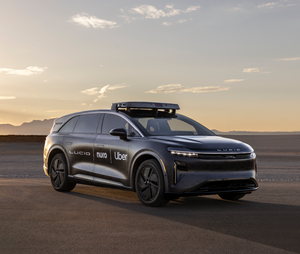
LAS VEGAS — In a move that signals a bold return to the hardware-integrated autonomous vehicle (AV) space, Uber Technologies Inc. (NYSE: UBER) took center stage at the 2026 Consumer Electronics Show (CES) to debut its first custom-built robotaxi. Developed in a high-stakes partnership with luxury EV maker Lucid Group Inc.
In a session characterized by exuberant record-breaking across major indices, Tesla Inc. (NASDAQ: TSLA) found itself an outlier today, January 6, 2026. As the Dow Jones Industrial Average (INDEXDJX: .DJI) surged past the historic 49,000 mark, Tesla’s stock struggled to find its footing, weighed down by a sobering
As of December 26, 2025, Tesla, Inc. (NASDAQ: TSLA) stands at one of the most significant crossroads in its twenty-two-year history. Once viewed primarily as a disruptive force in the automotive industry, Tesla has spent the last year aggressively rebranding itself as an artificial intelligence and robotics powerhouse. With a market capitalization hovering around $1.6 [...]
Chinese automaker BYD has seized the crown as the world’s top electric vehicle seller, ending Tesla’s decade-long reign. Numbers from 2025 paint a clear picture: BYD delivered 2.26 million vehicles while Tesla managed just 1.64 million, representing a 9 percent decline from the previous year for the American manufacturer.
Investors looking for hidden gems should keep an eye on small-cap stocks because they’re frequently overlooked by Wall Street.
Many opportunities exist in this part of the market, but it is also a high-risk, high-reward environment due to the lack of reliable analyst price targets.
Tesla (NASDAQ: TSLA) shares faced downward pressure on Friday morning after the electric vehicle pioneer reported fourth-quarter delivery figures that fell short of Wall Street's official consensus. The company announced it delivered 418,227 vehicles in the final three months of 2025, missing the analyst average of 422,850 units.
Tesla (NASDAQ: TSLA) kicked off 2026 with a jolt of optimism, releasing fourth-quarter 2025 delivery numbers that defied the most pessimistic "doomsday" scenarios circulating on Wall Street. Despite the expiration of the federal EV tax credit in late 2025—a move many analysts feared would crater demand—the Austin-based automaker
As the first trading week of 2026 unfolds, the world’s most watched electric vehicle maker, Tesla (NASDAQ: TSLA), finds itself at a defining crossroads. On January 2, 2026, the company released its fourth-quarter and full-year 2025 delivery results, confirming what many bears had feared: the automotive core of the
In a high-stakes start to the 2026 trading year, Tesla, Inc. (NASDAQ: TSLA) reported fourth-quarter vehicle delivery numbers that managed to narrowly beat the company’s own internal projections but failed to mask a broader slowdown in the electric vehicle (EV) sector. The report, released on the morning of January
As of January 1, 2026, the global electric vehicle (EV) market has entered what analysts are calling the "Survival Phase." The era of borderless green energy cooperation has been replaced by a fragmented landscape of trade zones, aggressive protectionism, and a dramatic shift in domestic policy. The most significant blow
As the final trading bell of 2025 approaches, Tesla, Inc. (NASDAQ: TSLA) stands at a historic crossroads, capping off a year that redefined its identity from a high-growth electric vehicle manufacturer to a diversified artificial intelligence and robotics powerhouse. Despite facing a second consecutive year of declining vehicle deliveries—estimated
As the clock winds down on 2025, Tesla (NASDAQ:TSLA) finds itself at the center of a profound market paradox that has sent shockwaves through the Nasdaq 100. Despite a year-over-year contraction in vehicle deliveries and a challenging macroeconomic "demand cliff," the electric vehicle giant’s valuation surged toward $1.
The electric vehicle (EV) market faced a harsh reality check today as shares of Rivian Automotive, Inc. (NASDAQ:RIVN) plummeted more than 5% in a high-volume trading session. Closing at approximately $19.48 on this final Tuesday of 2025, the drop marks a stark reversal from the optimistic rally seen
Lucid consistently increased its deliveries over the past year and a half, and there should be room to run -- but here's why it still might fall short.
As the sun sets on 2025, Tesla (NASDAQ: TSLA) finds itself in an unprecedented position. On this December 30, the company’s stock is trading near $459.64, having recently retreated from an all-time intraday high of $498.83 reached just eight days ago. This valuation surge, which pushed the
Electric vehicles were supposed to disrupt the auto industry, but sales are down, subsidies are going away, and Ford is pivoting away from EVs and taking $19.5 billion in charges to shift to hybrids. What strategy is the right one long-term?
As the curtains close on 2025, Tesla, Inc. (NASDAQ: TSLA) has once again defied the skeptics, orchestrating a massive year-end rally that propelled its market capitalization to a staggering $1.6 trillion. Despite fierce global competition and a shifting regulatory landscape for electric vehicles, the Texas-based titan saw its stock